checklistforadhd.com
ADHD Difficult Colleague Reset
ADHD Difficult Colleague Reset
Couldn't load pickup availability
Does This Sound Familiar?
There is someone at work who makes your working life harder. Maybe they are critical. Maybe they are dismissive. Maybe they take credit for work. Maybe they are just difficult in a way that is hard to name but easy to feel. And the energy you spend processing this person — replaying conversations, anticipating their reactions, managing your own response to them — is consuming cognitive bandwidth that should be going to your actual work. If you have ever wondered why workplace conflict hits you so much harder than it seems to hit your colleagues, or searched "ADHD rejection sensitivity at work" — this checklist separates the emotional experience from the professional response.
Why This Happens
ADHD rejection sensitive dysphoria makes workplace conflict disproportionately painful. A critical comment from a manager that a neurotypical colleague processes and moves on from can occupy an ADHD professional's entire afternoon. The comment feels like a personal rejection rather than a professional interaction, the emotional response is intense and rapid, and the resulting rumination costs focus, productivity, and wellbeing in ways that are invisible to the person who made the comment.
The Checklist
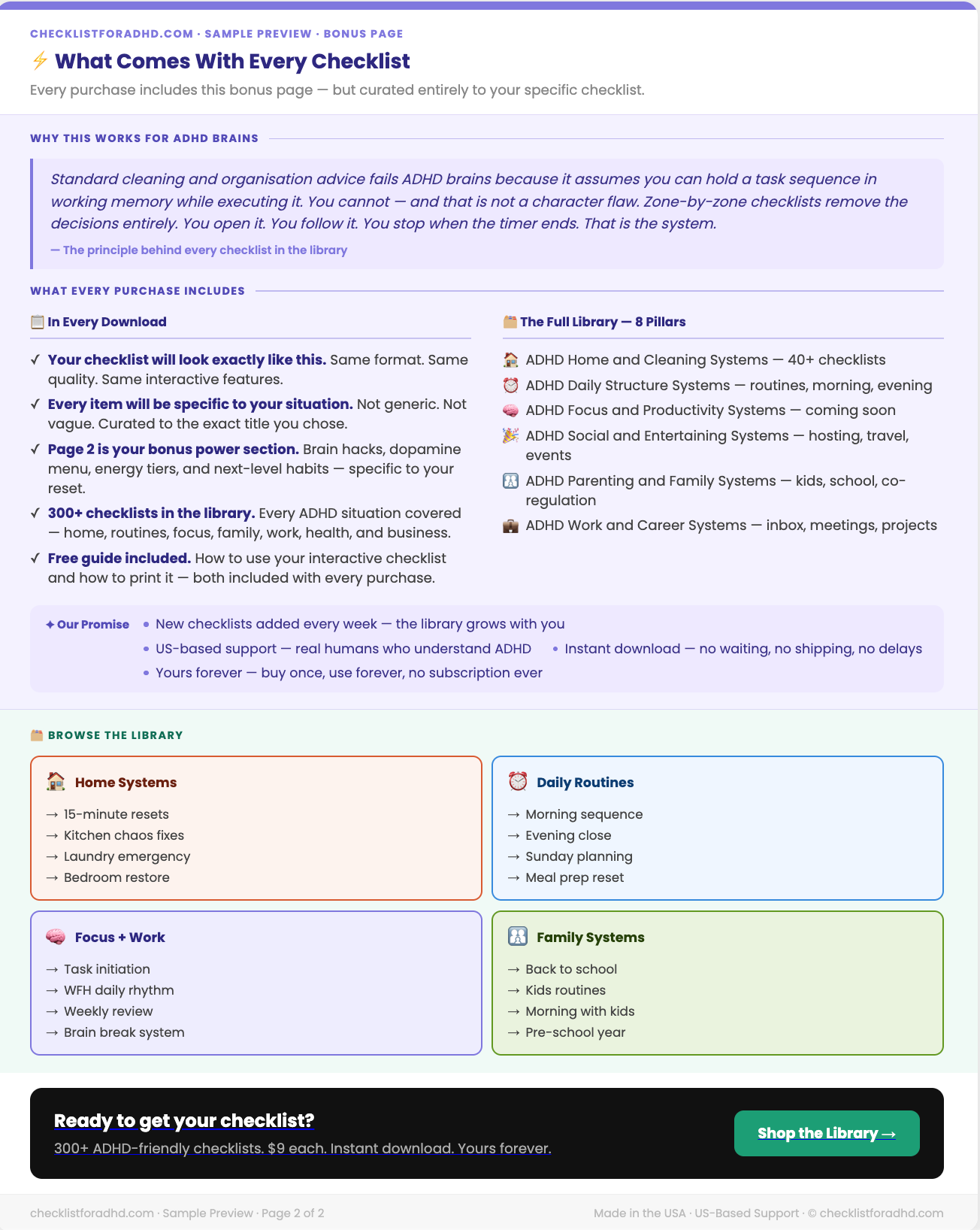
The ADHD Difficult Colleague Reset provides a four-zone framework for separating the emotional experience from the professional response. The first two zones name the situation specifically and check your own regulation and RSD involvement. The second two identify your actual options and the variables you can control.
Quick Tips
- Name the specific behaviour, not the person's character — "they frequently interrupt me in meetings" is addressable, "they are dismissive" is not.
- Do the RSD check before deciding what level of response is warranted — RSD consistently amplifies the perceived severity of interpersonal conflict.
- Documentation is professionally protective, not dramatic — dates, behaviours, impacts, brief notes in a private place.
Related Checklists
- ADHD Difficult Conversation Prep — when direct conversation is the response
- ADHD Performance Review Prep — document the impact on your work formally
- ADHD Brain Dump Reset — clear the mental load the relationship is creating
Frequently Asked Questions
When should I involve HR or my manager?
When the behaviour is repeated, documented, and affecting your ability to do your job despite having attempted to address it directly. HR involvement is appropriate when the behaviour constitutes harassment or discrimination, or when a pattern exists that direct conversation has not resolved.
My manager is the difficult person. How does this checklist apply?
Zone 3 of the checklist applies equally to a difficult manager — the options (direct conversation, documentation, escalation) are the same, the consideration of which option is appropriate given the power dynamic changes. Direct conversation with a manager requires more preparation and care. The Difficult Conversation Prep checklist provides the structure for that.
What if I need to work closely with this person and managed distance is not possible?
Zone 4 focuses on your response and your energy regardless of proximity. Professional interaction — task-focused, specific, minimal non-essential engagement — is sustainable even in close working relationships. Your emotional investment is a variable you can manage even when your physical proximity is not.
Share